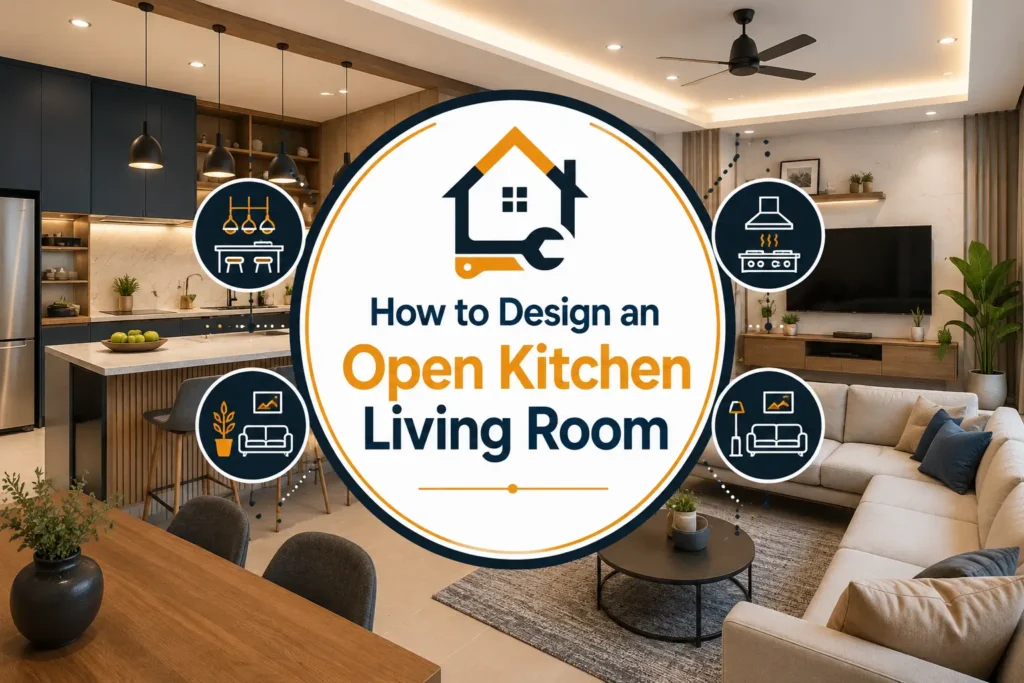

Open Kitchen Living Room
Many modern homes now combine the kitchen and living room area into one open space. While this layout can make a home feel bigger and brighter, it can also become messy, crowded, or poorly organized if the design is not planned carefully.
An open kitchen living room is a shared layout where the kitchen, dining, and lounge areas flow together without full walls separating them. This design creates a more social and spacious environment, improves natural light, and allows easier movement between areas while cooking, relaxing, or entertaining guests.
The challenge is making everything feel connected without losing comfort or function. A beautiful space should still work well for cooking, storage, seating, and daily family life.
In this guide from Smart Home Fix, you will learn how to design an attractive and functional open layout that feels balanced, organized, and comfortable.
Quick Summary
- Use furniture and lighting to separate zones naturally
- Keep colors and materials consistent across the space
- Add enough storage to reduce visible clutter
- Choose the right kitchen island size for traffic flow
- Layer lighting for cooking and relaxing areas
- Focus on comfort, movement, and practicality first
Start With the Right Layout
The layout is the foundation of the entire design. Before choosing colors or furniture, think about how people will move through the room every day.
A poorly planned space may look good in photos but feel frustrating in real life. You need enough room for cooking, walking, sitting, and storage without blocking movement.
The most common layouts include:
- L-shaped kitchen with a connected lounge area
- U-shaped kitchen with a dining section
- Island kitchen facing the living room
- Galley kitchen opening into a family room
For most homes, an island layout works best because it creates a natural transition between spaces.
Example
A family in Texas may use a large kitchen island as both a cooking prep area and breakfast seating while still facing the TV and seating area. This setup keeps the cook connected to the family instead of isolated behind walls.
Create Separate Zones Without Walls
One of the biggest mistakes people make is treating the whole room like one giant space. Even in an open layout, each area should still feel defined.
The best way to do this is through “zoning.”
You can separate spaces using:
- Area rugs
- Different lighting styles
- Furniture placement
- Ceiling designs
- Paint shades
- Flooring direction
For example, a sectional sofa can visually divide the living room from the kitchen without blocking openness.
A dining table between the kitchen and sofa area can also act as a natural divider.
Choose a Consistent Color Palette
Color consistency helps the entire space feel connected and calm.
If the kitchen uses dark modern cabinets but the living room uses bright farmhouse décor, the room may feel disconnected.
Instead, choose:
- 2–3 main colors
- One accent color
- Matching wood tones
- Coordinated metals and finishes
Neutral shades usually work best because they make the room feel larger and cleaner.
Popular choices include:
- White and warm wood
- Gray and black accents
- Beige and soft green
- Cream and natural oak
Try repeating materials throughout the room. For example, if your kitchen has matte black hardware, use similar black accents in lighting or furniture.
Focus on Kitchen Island Design
In many homes, the island becomes the center of the entire open kitchen living room setup.
A well-designed island adds:
- Extra counter space
- Casual seating
- Storage
- Visual separation
- Better traffic flow
However, an oversized island can make the room feel crowded.
Ideal Island Spacing
| Area | Recommended Space |
| Between island and cabinets | 36–48 inches |
| Seating per person | 24 inches |
| Walkway behind stools | 36 inches minimum |
Keep the island proportional to the room size.
If your home is smaller, a narrow island or peninsula may work better than a large centerpiece.
Use Smart Lighting Layers
Lighting matters more in open layouts because one room now serves multiple purposes.
You need lighting for:
- Cooking
- Dining
- Relaxing
- Entertaining
- Reading
Using only one ceiling fixture usually makes the room feel flat and uncomfortable.
Best Lighting Combination
Ambient Lighting
This is the main overall lighting, such as recessed ceiling lights.
Task Lighting
Focused lights for cooking and work areas. Under-cabinet lighting works extremely well here.
Accent Lighting
Decorative lighting like pendant fixtures, wall sconces, or floor lamps.
Natural Light
Large windows and sliding glass doors help the entire space feel bigger and more welcoming.
A good design balances all four layers.
Make Storage a Priority
Open spaces can quickly look messy because everything is visible.
That means storage becomes even more important than in traditional layouts.
Good storage ideas include:
- Deep kitchen drawers
- Pantry cabinets
- Hidden appliance garages
- Built-in shelves
- Storage benches
- Closed TV consoles
If clutter is always visible, the whole room feels stressful.
One practical trick is mixing open shelving with closed cabinets. Open shelves display attractive décor while closed storage hides everyday items.
Pick Furniture That Fits the Space
Large furniture can overwhelm an open layout very quickly.
Instead of buying oversized pieces, focus on scale and spacing.
Helpful Furniture Tips
- Use low-profile sofas to maintain openness
- Avoid bulky coffee tables
- Choose chairs that are easy to move
- Leave walking paths clear
- Use furniture with hidden storage when possible
A sectional sofa often works well because it naturally defines the lounge area.
Round dining tables are also great for smaller homes because they improve movement around the room.
Keep Traffic Flow Comfortable
Traffic flow means how easily people move around the room.
This is especially important in an open kitchen living room because multiple people may cook, eat, relax, or walk through the area at the same time.
Try to avoid:
- Blocking walkways with stools
- Tight corners around islands
- Large furniture near entrances
- Sharp layout transitions
People should be able to move naturally between spaces without squeezing through narrow gaps.
A good rule is keeping major walking paths at least 36 inches wide.
Balance Style With Function
Many homeowners focus too heavily on appearance and forget daily usability.
A trendy space may look amazing online but become difficult to live in.
For example:
- White sofas stain easily in family homes
- Open shelves require constant cleaning
- Glossy floors show dirt quickly
- Oversized pendant lights may block views
Always think about your real lifestyle first.
If you cook daily, prioritize durable counters and ventilation.
If you host guests often, focus on seating and conversation areas.
A successful design should support how you actually live.
Use Flooring Carefully
Flooring plays a major role in making the room feel unified.
Most designers recommend keeping the same flooring throughout the connected space.
This helps create visual flow and makes smaller homes appear larger.
Popular flooring choices include:
- Luxury vinyl plank
- Engineered hardwood
- Porcelain tile
- Laminate wood flooring
Avoid using too many flooring changes because they can break up the room visually.
If you want separation, rugs usually work better than switching materials.
Think About Sound and Smells
One downside of an open layout is that cooking noise and smells travel easily.
Without walls, sounds bounce around the entire room.
You can reduce this problem with:
- Upholstered furniture
- Curtains
- Area rugs
- Acoustic panels
- Quiet appliances
- Strong kitchen ventilation
A quality range hood is extremely important in modern open layouts.
Without proper ventilation, cooking odors may stay trapped in the living room area for hours.
Add Personality Without Clutter
Minimal design does not mean boring design.
The goal is creating warmth without overcrowding the room.
Easy ways to add personality include:
- Artwork
- Plants
- Textured pillows
- Wood accents
- Statement lighting
- Decorative bowls or books
Choose a few meaningful pieces instead of filling every surface.
Too much décor can make an open area feel chaotic very quickly.
Common Mistakes to Avoid
Ignoring Storage
Beautiful spaces fail quickly when everyday clutter has nowhere to go.
Choosing Oversized Furniture
Large furniture blocks movement and makes rooms feel smaller.
Poor Lighting Planning
Relying on one ceiling light creates shadows and uneven brightness.
Using Too Many Styles
Mixing too many colors, textures, and themes can make the room feel disconnected.
Forgetting Ventilation
Strong cooking smells can spread across the entire home without proper airflow.
Best Design Styles for Open Layouts
Different design styles work well depending on the home’s size and personality.
Modern
Clean lines, minimal décor, neutral colors, and sleek cabinetry.
Farmhouse
Warm wood tones, soft colors, comfortable seating, and rustic accents.
Scandinavian
Bright spaces, simple furniture, natural textures, and minimal clutter.
Transitional
A balanced mix of traditional and modern design elements.
For many American homes, transitional design works especially well because it feels timeless and practical.
How Families Can Make the Space More Functional
Families often use these rooms all day long, so flexibility matters.
Helpful additions include:
- Homework seating near the island
- Charging stations
- Easy-clean fabrics
- Kid-friendly storage
- Durable flooring
- Flexible dining furniture
An open layout works best when every family member can comfortably use the space.
Frequently Asked Questions
Is an open kitchen and living room a good idea?
Yes, it makes homes feel larger, brighter, and more social. It also improves interaction between family members while cooking, eating, or relaxing together.
Open layouts work especially well in modern homes with limited square footage because they improve visual space and natural light.
What colors work best in an open kitchen living room?
Neutral shades like white, beige, gray, and warm wood tones usually work best because they create a smooth and connected appearance across the space.
You can add personality through accent décor, pillows, lighting fixtures, or artwork without overwhelming the room.
How do I separate the kitchen from the living area without walls?
You can use rugs, kitchen islands, lighting, furniture placement, or ceiling designs to define each zone naturally while keeping the room open.
These methods maintain flow while still helping each section feel organized and purposeful.
What is the biggest mistake in open layouts?
Poor planning is usually the biggest issue. Many homeowners focus only on appearance and forget storage, traffic flow, or daily functionality.
A beautiful design should still feel comfortable and practical for everyday use.
Does an open layout increase home value?
In many cases, yes. Buyers often prefer open layouts because they feel modern, spacious, and family-friendly.
However, the design must still function well. Poor layouts or overcrowded spaces may reduce appeal instead of improving it.
Final Thoughts
Designing a beautiful and functional open kitchen living room takes more than choosing trendy furniture or copying online photos. The best spaces are carefully planned around comfort, movement, storage, lighting, and real daily life.
A successful open layout should feel connected without becoming cluttered or chaotic. When every area serves a purpose and flows naturally, the entire home becomes more enjoyable to live in.
At Smart Home Fix, we believe great home improvement ideas should always balance style with practicality. Small design decisions often make the biggest difference over time.