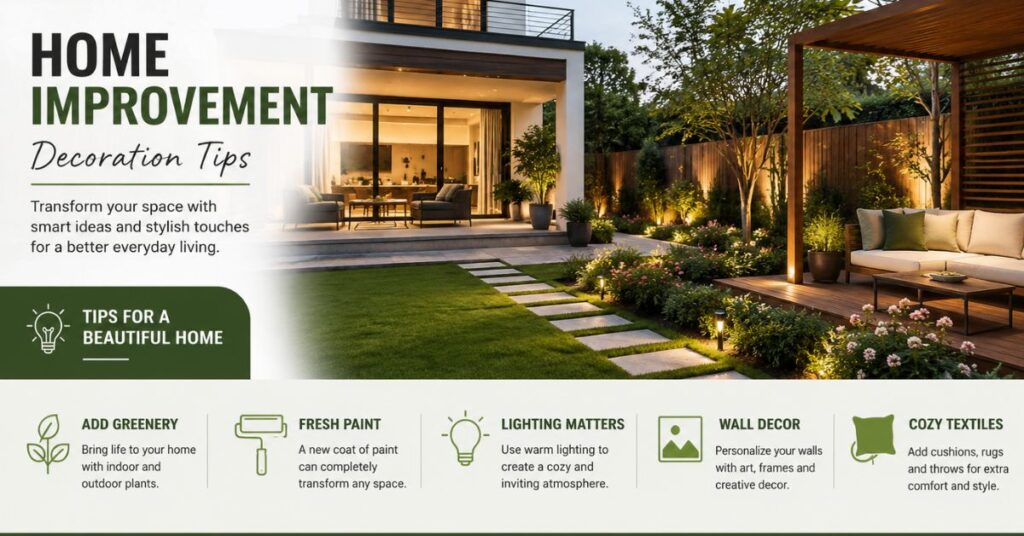

Decoration Tips Decoradyard: A Complete Guide for Every Space in Your Home
Decorating a home well is harder than it appears from the outside. Most people know what they like when they see it. The challenge is knowing what decisions to make in their own spaces, with their own furniture, their own budget, and their own limitations, to produce a result that actually matches the vision they have in mind.
The decoration tips from decoradyard take a practical approach to this challenge. Rather than presenting aspirational images with no pathway to replication, the guidance focuses on the specific decisions and the reasoning behind them that produce predictable, lasting improvement across both indoor and outdoor spaces.
This guide covers the most valuable decoration tips for every main area of the home, from living rooms and bedrooms to kitchens and the outdoor yard spaces that decoradyard specifically addresses alongside interior decoration.
Decoration tips decoradyard refers to the practical home and yard decoration guidance from the decoradyard platform, covering both interior styling and outdoor space improvement. These tips address color, furniture arrangement, lighting, plant selection, outdoor furniture, and the design principles that connect indoor and outdoor spaces into a cohesive whole. The approach focuses on accessible improvements that produce real visual and functional results without requiring professional design help.
Quick Summary
Decoration tips decoradyard cover both interior and outdoor spaces with practical, implementable guidance. The most impactful changes across every space are almost always lighting quality, color coherence, appropriate scale, and intentional editing before adding anything new. This guide covers specific tips for every main home area including the yard and outdoor spaces that make decoradyard’s approach distinctive.
The Decoradyard Approach: Why Both Indoor and Outdoor Spaces Matter
Most decoration guidance treats indoor and outdoor spaces as completely separate categories with no connection between them. The decoradyard approach recognizes something that experienced designers understand: a home that feels cohesive and well-designed addresses both spaces and considers how they relate to each other.
A beautifully designed living room that leads to a neglected, unstyled patio creates a jarring transition that diminishes both spaces. An outdoor area that is thoughtfully designed as an extension of the indoor living space makes the whole home feel larger, more intentional, and more fully realized.
This connected approach to indoor and outdoor decoration is what makes decoration tips decoradyard distinctive and practical for homeowners who want their entire property to feel designed rather than having well-decorated rooms surrounded by ignored outdoor spaces.
Living Room Decoration Tips
Establish a clear focal point first
Before any other decision, identify what the living room’s primary focal point is. The fireplace, the media wall, the primary window, or a significant piece of art can serve this purpose. All furniture should face toward and relate to this focal point rather than floating without direction.
The most common living room mistake is arranging furniture against walls. This creates a large, awkward empty center and removes the conversational intimacy that makes a living room function well. Pull furniture into a grouping around the focal point.
Get the rug size right before anything else
Among decoration tips decoradyard shares most consistently, correct rug sizing appears repeatedly because incorrect sizing is both the most common and most damaging single error in living room decoration.
The front legs of all primary seating pieces should sit on the rug. In most US living rooms, this means a minimum of 8 by 10 feet. When uncertain between two sizes, always choose the larger.
Layer three light sources for atmosphere
A single overhead light creates flat, institutional illumination regardless of the quality of what is in the room. Adding a floor lamp in one corner, a table lamp on a side surface, and controlling the overhead with a dimmer creates a room that shifts from bright and functional to warm and intimate with no additional purchases.
This is the highest-return living room improvement available for $100 to $200 in quality lamp additions.
Bedroom Decoration Tips
Treat the bed as the visual center of the room
Every other bedroom decision should work in relation to the bed. Quality bedding in a considered color, a headboard that gives the bed visual weight, and a bed sized appropriately for the room set the foundation that makes every subsequent decision easier.
High-quality linen or cotton bedding in a warm neutral creates the hotel-quality visual result that most people want from their bedroom without requiring any other significant changes.
Hang curtains at ceiling height
One of the highest-impact, lowest-cost decoration tips decoradyard offers: hang curtain rods as close to the ceiling as possible rather than at window frame height.
This makes ceilings feel taller, windows feel larger, and rooms feel more professionally decorated. The curtains cost the same. The installation is the same. The visual result is dramatically different.
Keep the color palette restrained
Bedrooms with multiple competing color families rarely feel restful. A palette of one dominant neutral, one secondary tone, and one accent used in bedding, textiles, and small accessories creates the visual coherence that supports rest.
Kitchen and Bathroom Decoration Tips
Clear every kitchen surface before any styling
Kitchen counters accumulate objects gradually until they primarily serve as storage. Removing everything and replacing only what is used daily is the most impactful kitchen decoration improvement available at zero cost. The visual improvement consistently surprises homeowners with how significant it is before any purchases are made.
Replace hardware as a room-level update
Cabinet pulls and knobs in kitchens and bathrooms are visible daily and communicate the quality of the space more than most homeowners realize. Replacing all hardware with consistent, current designs in a single finish costs $60 to $150 and takes an afternoon. The improvement reaches every cabinet simultaneously.
Bathroom mirror replacement delivers the most per dollar
The builder-grade mirror in most bathrooms is the element whose replacement transforms the room most dramatically. A frameless oversized mirror, a framed design in a complementary finish, or a backlit LED mirror changes the character of the space immediately.
Cost runs $80 to $250. Installation is basic wall-mounting. The before-and-after visual difference is typically dramatic and immediate.
Decoration Tips Quick Reference
| Space | Best First Change | Cost Range | Visual Impact |
|---|---|---|---|
| Living Room | Correct rug size | $150 to $400 | Very High |
| Living Room | Layered lighting | $100 to $200 | Very High |
| Bedroom | Ceiling-height curtains | $50 to $150 | High |
| Bedroom | Quality bedding | $80 to $200 | High |
| Kitchen | Surface declutter | $0 | Very High |
| Kitchen/Bathroom | Hardware replacement | $60 to $150 | High |
| Bathroom | Mirror replacement | $80 to $250 | Very High |
| Outdoor/Patio | Define zones with rug | $50 to $200 | High |
| Yard | Anchor plants at entries | $60 to $200 | High |
| All Spaces | Warm LED bulbs | $20 to $40 | High |
Outdoor and Yard Decoration Tips
This is where decoration tips decoradyard distinguishes itself from purely interior-focused guidance. Outdoor spaces are often the most neglected area of home decoration despite representing a significant portion of a home’s total livable area for much of the year.
Create zones in outdoor spaces the same way you would indoors
Successful outdoor decoration applies the same zoning principle that works in open-plan interiors. Define separate areas for different purposes: dining, seating, gardening, play, or relaxation. Each zone becomes more useful and more visually resolved when it has a defined purpose and is furnished or planted accordingly.
An outdoor dining zone with a table sized for the space, proper outdoor chairs, and overhead lighting creates a genuinely usable outdoor dining room. The same furniture randomly placed without a defined zone reads as cluttered rather than furnished.
Use plants as outdoor design elements, not just nature
Plants in outdoor spaces should be chosen and placed with the same intentionality that you would bring to selecting furniture and accessories for an interior room. Consider scale, color, texture, and seasonal interest when selecting plants for different positions in the yard.
Large architectural plants at corners and entries create visual anchors the same way statement furniture does indoors. Ground-level plantings in consistent species create the visual flow that a coordinated color palette creates inside. Container plants on patios and decks add the same kind of organic texture that indoor plants add to living rooms.
A homeowner in Phoenix redesigning their front yard applied this principle by using three large agave specimens as corner anchors and consistent low groundcover in a single species between them. The result looked professionally designed because the plant selection was treated as a design decision rather than a gardening decision.
Outdoor furniture should match the indoor standard
One of the most consistent recommendations in decoration tips decoradyard for outdoor spaces is treating outdoor furniture quality and selection with the same care applied to indoor furniture.
Cheap, mismatched outdoor furniture communicates that the outdoor space is an afterthought. Quality outdoor furniture in consistent materials, appropriately sized for the space and the people using it, communicates that the outdoor area is a genuine extension of the home.
This does not require expensive furniture. It requires furniture chosen with the same attention to scale, proportion, and coherence applied to indoor choices.
Define outdoor spaces with rugs and lighting
Outdoor rugs and lighting do for outdoor spaces exactly what they do for indoor ones: define zones, add warmth, and create atmosphere that makes the space genuinely inviting rather than merely functional.
An outdoor rug beneath a patio dining set defines the dining zone visually the same way an indoor rug defines a seating group. String lights or lanterns in outdoor seating areas create the warm ambient light that makes outdoor spaces enjoyable after dark and extend their usable hours significantly.
Connect indoor and outdoor visually
The spaces that feel most cohesive are those where indoor and outdoor spaces share visual language through color, material, or style. Using exterior paint colors that relate to interior wall colors, choosing outdoor furniture in materials that echo indoor finishes, or planting in colors that complement interior textiles creates the visual connection that makes a home feel designed as a whole rather than room by room.
Conclusion
The decoration tips from decoradyard cover something most home decoration guidance misses: the importance of treating the whole property as a cohesive design environment rather than decorating individual rooms in isolation. When indoor and outdoor spaces share visual language and when both receive the same level of design intention, the result is a home that feels genuinely complete.
Start with the indoor space that needs the most improvement and address its foundational weakness before adding anything new. Then apply the same intentional approach to outdoor spaces, beginning with zone definition and plant selection as design choices. That sequence, room by room and space by space, produces the kind of whole-home transformation that individual purchases without this framework cannot.
If this guide was helpful, explore our related articles on how to design an outdoor living space from scratch and the best budget interior decoration changes with lasting impact. Both give you the next practical steps for applying these principles throughout your home.
Frequently Asked Questions
What are decoration tips decoradyard?
They are practical home and outdoor decoration insights covering both interior styling and yard spaces, focusing on foundational decisions that produce lasting improvement rather than trend-dependent recommendations.
What is the most impactful indoor tip?
Improving lighting quality. Layered warm lighting with floor lamps, table lamps, and a dimmer creates a fundamentally different atmosphere than any furniture or accessory purchase at the same cost.
What are the most important outdoor tips?
Define activity zones, treat plant selection as a design decision, use outdoor rugs and lighting, and choose outdoor furniture with the same quality standards you apply indoors.
How do I connect indoor and outdoor spaces visually?
Use exterior paint that relates to interior colors, choose outdoor furniture that echoes indoor finishes, and plant colors that complement interior textiles. Even two or three shared elements create visual coherence.
How much should I budget?
Indoor lighting and styling improvements start at $100 to $300 per room. A fuller interior update runs $300 to $600. Outdoor decoration for a standard patio or yard typically costs $400 to $1,500.
Do I need a professional?
No. Most tips including rug sizing, lighting, hardware, mirror installation, and outdoor zone planning are fully DIY-accessible for any motivated homeowner.