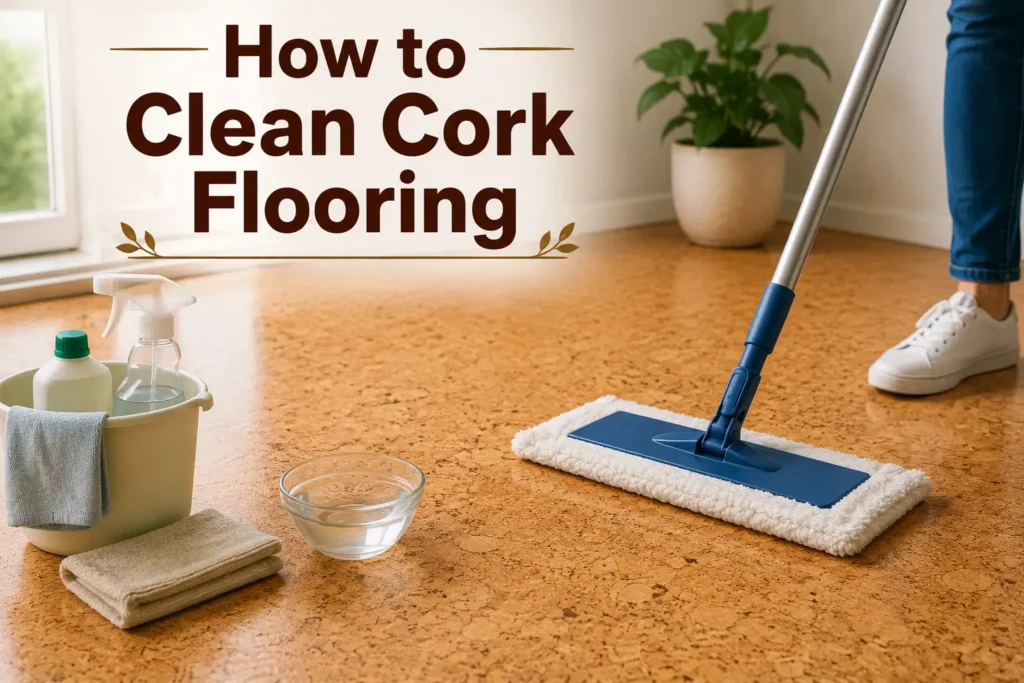

Cork flooring is soft, warm, and eco-friendly. It feels great under your feet, and it adds a natural, cozy look to any room. More and more homeowners are choosing cork because it is comfortable, quiet, and good for the environment.
But cork is also a delicate material. It is not like tile or vinyl. If you clean it the wrong way, you can damage the surface fast. Water, harsh chemicals, and rough scrubbing can all shorten the life of your floor.
That is why knowing how to clean cork flooring the right way matters so much. In this guide, Smart Home Fix will walk you through simple steps, smart do’s and don’ts, and easy care tips. By the end, you will know exactly how to keep your cork floors clean, safe, and beautiful for years to come.
What Makes Cork Flooring Unique
Cork comes from the bark of cork oak trees. Workers peel the bark without harming the tree, so the tree keeps growing and the bark grows back. This is why cork is seen as a natural, renewable material.
Cork has a soft, spongy feel. This comes from millions of tiny air pockets trapped inside the material. These air pockets are what make cork floors bouncy and comfortable to walk on. They also make the floor quieter than hard tile or wood.
Because of this special structure, cork behaves differently than other flooring types. It is more porous, which means it can soak up water and stains faster if it is not protected. Most cork floors come with a sealed finish on top. This seal acts like a shield. It stops water and dirt from soaking into the cork itself.
Cork flooring is a popular choice for:
- Living rooms
- Bedrooms
- Home offices
- Playrooms
- Basements with good moisture control
It is not always the best fit for very wet rooms like bathrooms, unless the cork has a strong, waterproof seal. Knowing this helps you understand why cleaning cork the right way is so important. The floor’s comfort comes from the same structure that makes it sensitive to water and rough handling.
Why Cork Floors Need Special Cleaning Care
Many people treat cork floors the same way they treat hardwood or laminate. This is a common mistake. Cork is softer, more porous, and more sensitive to moisture than most other flooring materials.
If you use the wrong cleaning method, here is what can happen over time:
- The color can start to fade or look uneven
- Small cracks can form on the surface
- The floor can warp, buckle, or lift at the edges
- The protective finish can turn dull or cloudy
- Water stains can appear and stay permanently
None of this means cork flooring cleaning is hard. It simply means you need the right approach. Once you understand a few basic rules, cleaning cork becomes just as easy as cleaning any other floor. The main rule to remember is this: keep water use light, and avoid harsh chemicals at all costs.
How to Clean Cork Flooring: Step-by-Step Guide
Cleaning cork flooring the right way comes down to three simple habits. Sweep often, mop gently, and always use the correct products. Let’s go through each step in detail so you know exactly what to do.
Daily Sweeping and Dust Removal
Dust, sand, and small grit are the biggest hidden threats to cork floors. These particles seem harmless, but every time someone walks across the floor, tiny grains get pushed and dragged along the surface. Over weeks and months, this creates thousands of tiny scratches. These scratches build up and slowly dull the floor’s natural shine.
This is why sweeping should be part of your daily or near-daily routine. It takes only a few minutes but makes a huge difference in how long your floor stays looking new.
Here is how to sweep cork floors the right way:
- Use a soft-bristle broom or a microfiber dry mop
- Sweep in the direction of the plank or tile seams
- If you prefer a vacuum, choose one with a hard floor setting
- Avoid vacuums with a spinning beater bar, since it can scratch the surface
- Pay extra attention to corners and edges, where dust tends to build up
In homes with pets or children, sweeping may need to happen more often, sometimes even twice a day. This simple daily habit protects the floor’s finish and makes cork flooring maintenance much easier in the long run.
Damp Mopping the Right Way
Mopping is where most people go wrong with cork floors. Cork does not like standing water. If water sits on the surface for too long, it can seep into the seams between planks or tiles. This can cause swelling, warping, or even mold growth underneath the floor.
The good news is that damp mopping is still safe, as long as you follow the right technique.
Here is the correct process:
- Use a microfiber mop, not a heavy string mop
- Dip the mop into your cleaning solution
- Wring it out well until it feels only slightly damp
- Mop in small sections, moving in the direction of the planks
- Dry each section with a soft, clean cloth right after mopping
Never let water pool on the floor while you work. If you notice extra moisture anywhere, wipe it up immediately. Aim to damp mop your cork floor about once a week. In busier homes with more foot traffic, twice a week is fine, as long as you keep the mop only lightly damp each time.
Best Cleaning Products for Cork Flooring
Choosing the right cleaning product matters just as much as your mopping technique. The wrong cleaner can strip away the protective seal, even if you use very little water.
Always look for a cleaner that is labeled pH-neutral and made for sealed hard floors. These cleaners are gentle enough not to damage the finish, but strong enough to lift dirt and grime.
Another simple and affordable option is a mix of warm water and a small amount of mild dish soap. A few drops in a bucket of water is usually enough for weekly cleaning.
Products to avoid completely include:
- Vinegar-based cleaners
- Ammonia-based cleaners
- Oil soaps
- Wax-based cleaning products
- Anything labeled as an abrasive or heavy-duty cleaner
These products might seem like natural or effective options, but they can slowly break down the protective coating on cork floors. Once that coating is damaged, the cork underneath becomes exposed to moisture and dirt, which speeds up wear and tear.
Do’s of Cleaning Cork Flooring
Building good habits early will save you time and money later. Here are the most important do’s to follow:
- Sweep or vacuum the floor often to remove grit before it causes scratches
- Wipe up spills the moment they happen, rather than waiting
- Use a well-wrung, damp microfiber mop instead of a wet one
- Choose a pH-neutral, cork-safe cleaner every time
- Place mats or rugs at entry points to catch dirt before it reaches the cork
- Dry the floor with a soft towel right after mopping
- Test any new cleaning product on a small, hidden spot before using it on the whole floor
Following these simple habits keeps your cork flooring cleaning routine safe, easy, and effective.
Don’ts of Cleaning Cork Flooring
Just as important as the do’s are the things you should avoid completely. A single mistake, like using a steam cleaner, can cause damage that is hard to reverse.
Avoid the following at all times:
- Do not soak the floor or allow standing water to sit
- Do not use a steam cleaner or steam mop under any circumstances
- Do not use bleach, ammonia, or vinegar-based cleaning products
- Do not use wax, oil soap, or solvent-based cleaners unless your floor specifically calls for wax finishing
- Do not scrub the surface hard with abrasive pads or stiff brushes
- Do not place rubber-backed mats directly on the cork, since rubber traps moisture underneath
- Do not let spills sit for long periods, even small ones
Avoiding these mistakes is one of the easiest and most effective ways to protect your cork floor and keep its natural beauty intact for years.
How to Remove Stains from Cork Flooring
Even with the best care routine, spills and stains happen. The key with cork flooring is to act fast and stay gentle. Harsh scrubbing or delayed cleanup can turn a small spill into a permanent mark.
Follow these steps when dealing with a stain:
- Blot the spill right away using a clean, dry cloth. Never rub the spot, since rubbing pushes the liquid deeper into the pores of the cork.
- For stains that have already dried, dampen a soft cloth with warm water mixed with a small amount of mild cleaner.
- Gently wipe the stained area using small, circular motions.
- Once the stain lifts, dry the area completely with a clean towel to prevent any leftover moisture from soaking in.
For tougher stains, like grease, ink, or crayon marks, you may need a slightly stronger cork-safe cleaner. Always test any new product on a hidden section of the floor first, such as inside a closet or under furniture. Harsh scrubbing tools, steel wool, or rough sponges should never touch a cork surface, since they can leave scratches or dull patches that are very difficult to fix.
Deep Cleaning Tips for Cork Floors
Weekly sweeping and mopping keeps the surface fresh day to day, but every few months, your cork floor may need a deeper clean. This helps remove built-up grime, oils from foot traffic, and dust that regular cleaning can miss over time.
For a proper deep clean, follow these steps:
- Start by sweeping and vacuuming the entire floor to remove loose dirt
- Mop with a cork-safe cleaner, working in small, manageable sections
- Dry each section immediately after mopping, rather than letting it air dry
- Check the finish closely for any dull spots, scratches, or areas of wear
If your cork floor has a wax finish, it may need fresh wax applied a few times a year to keep it protected. Floors with a urethane or polyurethane seal do not need waxing at all. These simply need regular gentle cleaning to stay in good shape. Knowing which finish your floor has will help you plan the right deep cleaning routine.
How to Protect Cork Flooring After Cleaning
Cleaning is only half the job when it comes to caring for cork floors. Protecting the floor after cleaning is what really helps it last for many years without needing major repairs or replacement.
Here are some simple habits that make a big difference:
- Keep curtains or blinds closed during the hours of strongest sunlight, since cork can fade with too much direct sun exposure
- Use felt pads under the legs of furniture to prevent dents and scratches
- Place mats in high-traffic areas, especially near entrances and in front of sinks
- Try to maintain steady indoor humidity levels, since cork can crack if the air becomes too dry
- Reseal the floor every few years once the finish starts to look thin or worn
Taking these extra steps protects the floor’s finish long after cleaning day is over. It also reduces how often you need to do a deep clean, since the floor stays protected from daily wear.
Common Mistakes to Avoid When Cleaning Cork Floors
Even careful homeowners can slip into bad habits without realizing it. Being aware of these common mistakes can help you avoid unnecessary damage.
Watch out for the following:
- Cleaning with a soaking wet mop instead of a properly wrung, damp one
- Using strong, scented household cleaners that are not made for cork
- Skipping regular sweeping and only mopping every once in a while
- Letting pet accidents or spills sit for too long before cleaning them up
- Placing rubber-backed rugs or mats directly on the cork surface
Avoiding these small but common mistakes makes a big difference in how long your cork flooring stays looking fresh, smooth, and undamaged.
FAQs About Cleaning Cork Flooring
Can I use a steam mop on cork flooring?
No, steam mops are not safe for cork floors. The heat and moisture can damage the seal and cause warping.
How often should I clean cork flooring?
Sweep daily and damp mop once a week. This routine keeps dirt and grit from scratching the surface.
Is vinegar safe for cleaning cork floors?
No, vinegar is too acidic for cork. It can wear down the protective seal over time.
Can cork flooring get wet?
Cork can handle light moisture from damp mopping, but standing water can cause serious damage. Always dry spills right away.
Does cork flooring need to be resealed?
Yes, most cork floors need resealing every few years. This depends on foot traffic and how well the floor is maintained.
Final Thoughts
Cork flooring is a beautiful, comfortable choice for any home, and keeping it clean does not have to be complicated. Stick to gentle sweeping, careful damp mopping, and pH-neutral cleaners, and always avoid harsh chemicals, steam, and standing water.
With the right care routine, your cork floor can stay soft, warm, and beautiful for many years to come. Smart Home Fix hopes this guide makes your cork flooring cleaning routine simple, stress-free, and easy to follow every single day.