
Introduction: Why Home Solar Matters Today
Electricity bills in the USA, UK, and Canada are rising every year. Many homeowners are now looking for smarter ways to reduce costs and gain energy independence. One of the most effective solutions is using solar energy at home.
This is where Solar Panel Kits come in. These kits make it easier for homeowners to install solar power systems without building everything from scratch. Instead of buying separate parts, you get a complete package designed to work together.
In this guide by Smart Home Fix (Fixing Homes, Enhancing Lives), you will learn what solar kits are, how they work, and which options are best for home energy systems. You will also understand how to choose the right kit based on your home size and energy needs.
What Are Solar Panel Kits?
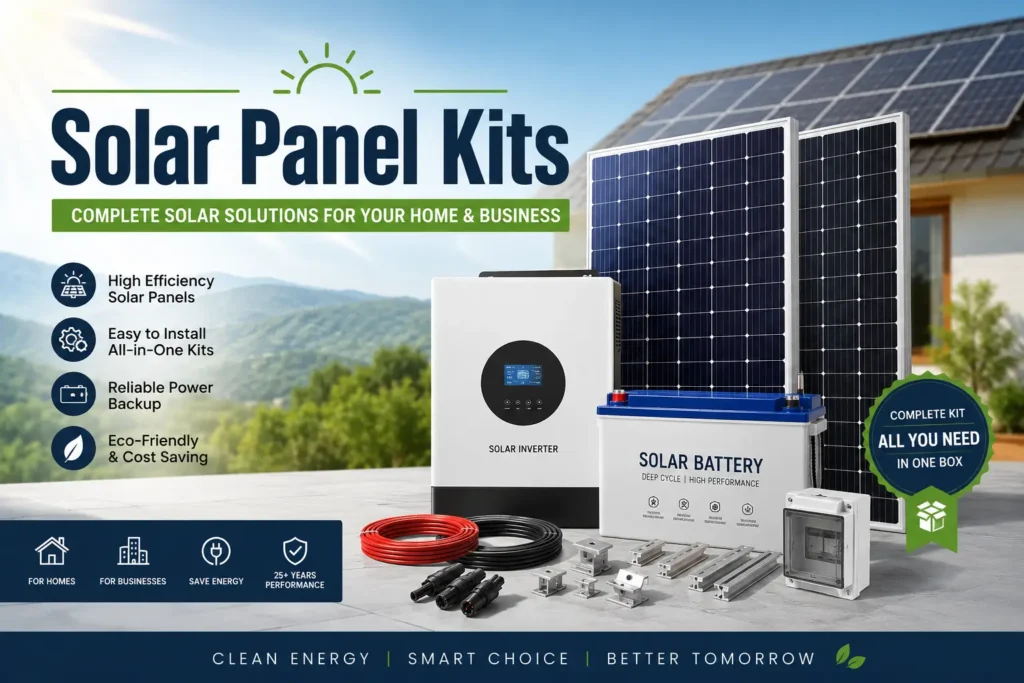
Solar Panel Kits are complete home solar power packages that include all the essential components needed to generate electricity from sunlight. A typical kit includes solar panels, an inverter, mounting equipment, and wiring.
These systems convert sunlight into usable electricity for your home appliances. Some kits are designed for small backup systems, while others can power an entire house depending on size and capacity.
In simple terms, it give homeowners a ready-made solution to start using solar energy without complex setup planning.
Quick Summary
- Solar kits help homeowners generate their own electricity
- They include panels, inverter, wiring, and mounting gear
- Perfect for reducing electricity bills and gaining energy independence
- Available in small, medium, and full-home systems
- Easy to install compared to custom solar setups
How Solar Panel Kits Work
Solar energy systems work in a simple flow:
- Solar panels capture sunlight
- Energy is converted into DC electricity
- The inverter converts DC into AC power
- Electricity powers your home appliances
- Extra energy can be stored or sent back to the grid
For example, a homeowner in Texas can use a mid-size solar kit to power lights, fans, refrigerator, and even small air conditioning units during peak sunlight hours.
This system reduces dependency on the grid and helps lower monthly bills significantly.
Types of Solar Panel Kits for Homes
Understanding the different types of kits is important before buying.
Off-Grid Solar Kits
These systems are not connected to the power grid. They store energy in batteries for later use.
Best for: Remote homes or rural areas
Pros: Full independence
Cons: Higher upfront cost due to batteries
On-Grid Solar Kits
These systems connect directly to the utility grid. Excess energy is sent back to the grid.
Best for: Urban homes in the USA and UK
Pros: Lower cost, no batteries needed
Cons: No backup during outages
Hybrid Solar Kits
Hybrid systems combine both grid connection and battery storage.
Best for: Homeowners who want backup power
Pros: Flexible and reliable
Cons: More expensive than standard systems
Benefits of Using Solar Panel Kits
Lower Electricity Bills
One of the biggest benefits is saving money. Many homeowners reduce bills by 40%–70% depending on system size.
Energy Independence
With Solar Kits, you rely less on utility companies and rising electricity prices.
Eco-Friendly Living
Solar energy reduces carbon emissions and helps fight climate change.
Easy Installation
Compared to custom systems, kits are simpler and faster to install.
For example, a homeowner in California using a 6kW system can power most household appliances during daylight hours without grid usage.
Things to Consider Before Buying Solar Panel Kits
Home Energy Usage
Check your monthly electricity usage before selecting a kit size.
Roof Space
More panels require more roof area with good sunlight exposure.
Battery Requirement
Decide if you need backup power at night or during outages.
Budget
Basic systems are affordable, but full-home setups require more investment.
Local Climate
Areas with more sunlight will generate more energy efficiency.
Best Use Cases for Solar Kits
Solar kits are useful in many situations:
- Small homes looking to reduce bills
- Off-grid cabins in rural areas
- Backup power during emergencies
- Eco-friendly home upgrades
- Long-term energy savings investment
Cost Overview of Solar Panel Kits
Prices vary depending on system size:
- Small kits (1–2kW): Affordable starter systems
- Medium kits (3–6kW): Suitable for average homes
- Large kits (7kW+): Full-home energy systems
In the USA, most homeowners invest in mid-range systems because they balance cost and performance effectively.
Installation Overview
Installing Solar Panel usually involves:
- Mounting panels on the roof
- Connecting wiring system
- Installing inverter
- Setting up battery (if included)
- Testing system output
Professional installation is recommended for safety and efficiency.
Maintenance Requirements
Solar systems are low-maintenance. Basic care includes:
- Cleaning panels every few months
- Checking wiring connections
- Monitoring energy output
- Ensuring no shading blocks sunlight
With proper care, systems can last 20–25 years.
Pros and Cons of Solar Panel Kits
Pros:
- Saves money on electricity bills
- Renewable and clean energy
- Easy system setup
- Long-term investment value
Cons:
- High upfront cost
- Weather dependent efficiency
- Roof space limitations
Frequently Asked Questions
Are Solar Panel Kits worth it for homes?
Yes, Solar Kits are worth it for most homeowners because they significantly reduce electricity bills over time. They also increase energy independence and provide long-term savings, especially in sunny regions like California and Texas.
How long do Solar Panel Kits last?
Most Solar Kits last between 20 to 25 years with proper maintenance. The panels degrade slowly over time but still maintain strong efficiency for decades, making them a reliable long-term investment.
Can Solar Panel Kits power a whole house?
Yes, larger systems can power an entire home depending on energy usage. A properly sized system can run lights, appliances, and even heating or cooling systems during daylight hours or with battery storage.
Do Solar Panel Kits work during cloudy weather?
Yes, they still generate electricity on cloudy days but at reduced efficiency. Modern panels are designed to capture diffused sunlight, so they continue producing power even without direct sun.
What size Solar Panel Kits do I need?
It depends on your electricity usage. Small homes may need 1–3kW systems, while average homes usually require 4–6kW systems for balanced energy production and savings.
Conclusion
If you’re planning to upgrade your home energy system, Solar Panel Kits can be a smart first step. Start by understanding your energy needs and choosing a system that matches your home size and budget. For more smart home guides, visit Smart Home Fix – Fixing Homes, Enhancing Lives.